
Energy Conversion: Why Do You Feel Hot After Running?

Introduction After running 2.4 km, your heart is beating quickly, you are breathing hard and your body feels hot. But where did that heat come from? The answer lies in energy conversion. When we move, energy does not simply disappear or get “used up”. Instead, energy is transferred and converted from one form to another. […]
Green Leaves Explanation: Why Are Leaves Green?
Introduction A simple green leaves explanation can help students understand an important Primary Science idea about light and plants. Many children assume that leaves are green because plants “use” green light the most. In fact, the opposite is closer to the truth. Leaves look green because a pigment called chlorophyll absorbs some colours of light […]
Series and Parallel Circuits: Why One Bulb Going Out Does Not Always Turn Off the Rest
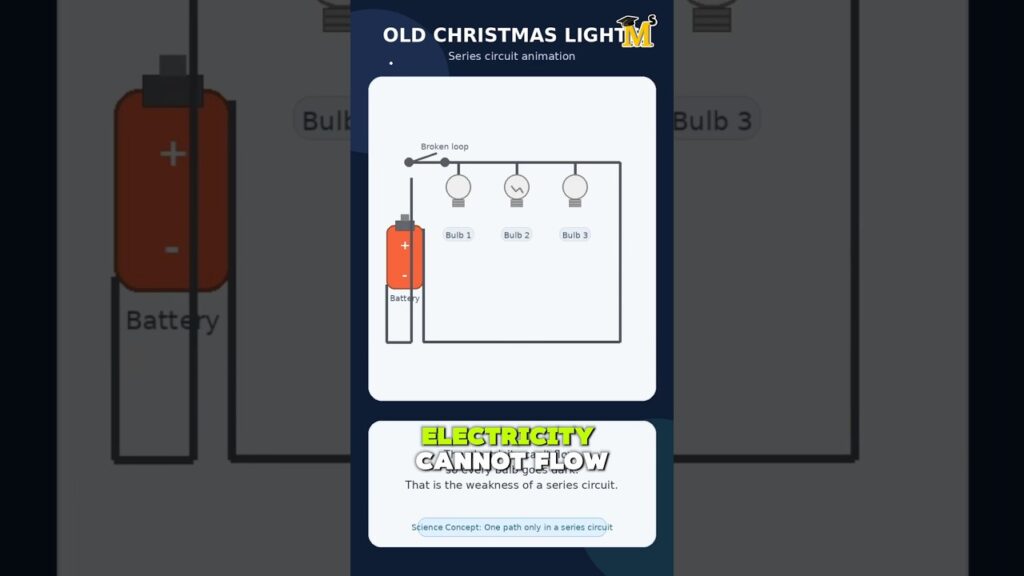
Introduction Series and parallel circuits are a common Science topic that many Primary and PSLE students find confusing at first. A very common real-life question is this: if one bulb burns out, why do some lights all go off, while others keep shining? The answer depends on whether the bulbs are arranged in a series […]
Concave Convex Reflection: Why Does a Spoon Show Two Different Images?
Introduction Many students are surprised when they look at a spoon and notice something strange. On one side, their image appears upside down. On the other side, their image appears upright. How can the same spoon create two different images? This is where concave convex reflection becomes important. In PSLE Science, students learn that light […]
Evaporation Boiling: What Is the Difference in PSLE Science?

Introduction Many students think evaporation and boiling are the same because both involve water changing into water vapour. However, in PSLE Science, evaporation boiling questions require students to explain the differences clearly using the right keywords. Evaporation can happen at any temperature and only takes place at the surface of the liquid. Boiling happens only […]
Mass vs Weight: Are They Really the Same Thing?

Introduction Many students think mass and weight are the same thing, but in Science, they are different. This is why mass vs weight questions can confuse students every year, especially when the question involves Earth, the Moon, or outer space. In PSLE Science, students must understand that mass is the amount of matter in an […]
Density Floating Sinking: Why Objects Float or Sink in PSLE Science

Introduction Many students remember that some objects float while others sink, but they may not always understand why. In PSLE Science, the key concept behind this is density floating sinking. Density helps us compare how closely packed the matter in an object is, when an object is placed in a liquid, whether it floats or […]
Heat Transfer: Why Ice Cream Melts but the Spoon Does Not

Introduction Many students enjoy eating ice cream, but few stop to think about the Science behind it. When holding a metal spoon in ice cream, the ice cream melts, but the spoon does not. This everyday situation is a great way to understand heat transfer. In PSLE Science, students need to know that heat moves […]
Blood Circulation: How Blood Travels Around the Body Every Day

Introduction Many students know that blood moves around the body, but they may not realise how active this process is. Blood circulation happens all the time, even when we are sitting, sleeping, studying, or exercising. In PSLE Science, students need to understand how blood carries oxygen and useful substances around the body. The video explains […]
Gravitational Potential Energy: A Simple PSLE Science Explanation
Introduction Many students find energy topics confusing at first, especially when they see terms like gravitational potential energy and kinetic energy. However, once the idea is broken down simply, it becomes much easier to understand. In PSLE Science, students need to know that energy can be stored and transferred. One important example is gravitational potential […]