
PSLE Science Meniscus Reading Question – Measuring Cylinder Explained (2021 Q16)
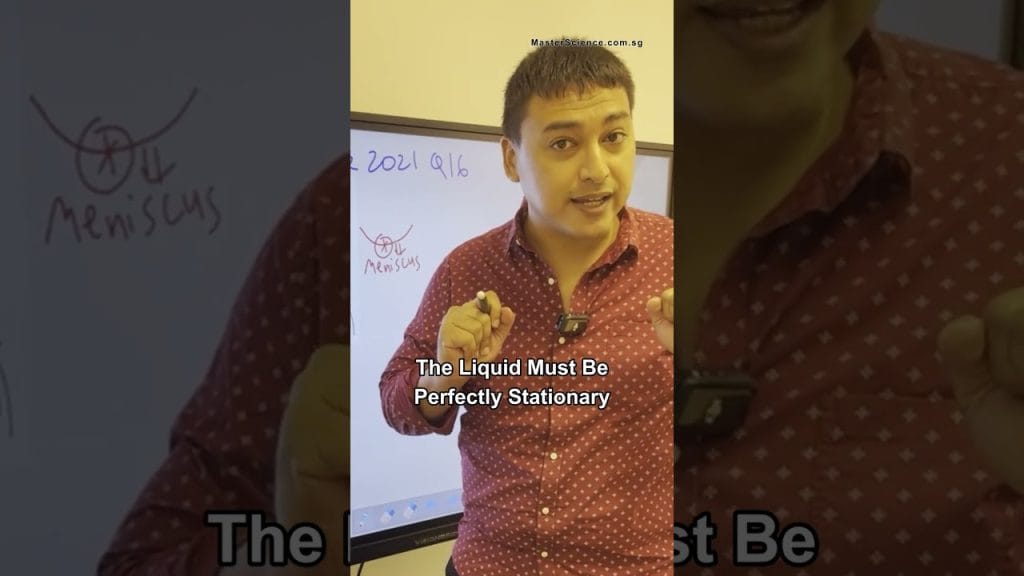
Introduction Many students lose marks in practical questions because they do not read measurements correctly. This PSLE Science meniscus reading question tests whether students know where to look when reading water levels in a measuring cylinder. Let’s follow the teacher’s exact explanation shown on the board. The Question Mary wants to read the volume […]
PSLE Science Heat Transfer Question – Balloon Shrinking Explained (2012 Q16)
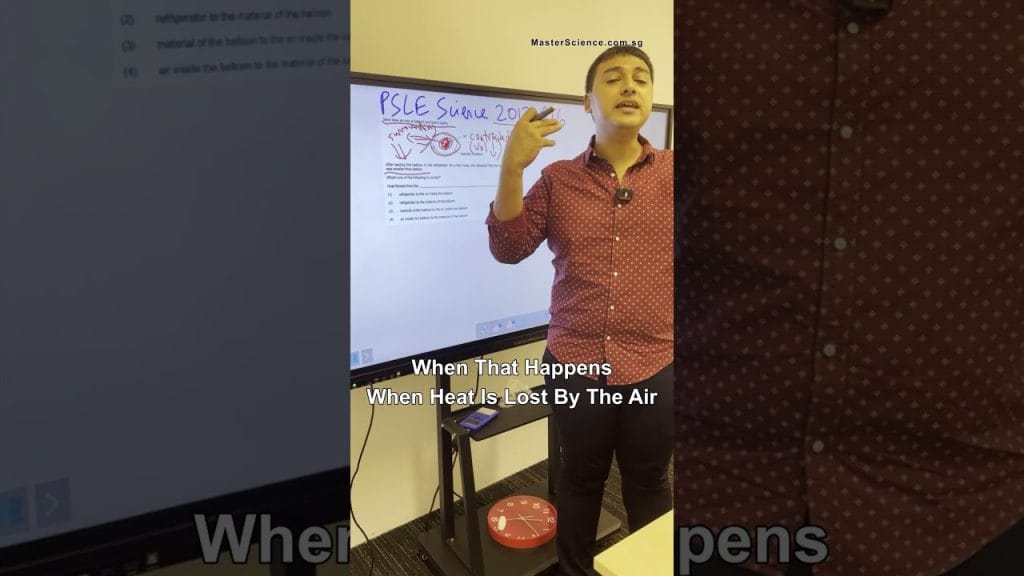
Introduction Why does a balloon shrink after being placed in a refrigerator? This PSLE Science heat transfer balloon question tests whether students understand heat movement, not air leakage or balloon material changes. Let’s walk through the teacher’s exact board explanation step by step. The Question A balloon is blown with air and tied tightly. […]
Mushrooms and Ferns Explained (Q10) – PSLE Science MCQ Question
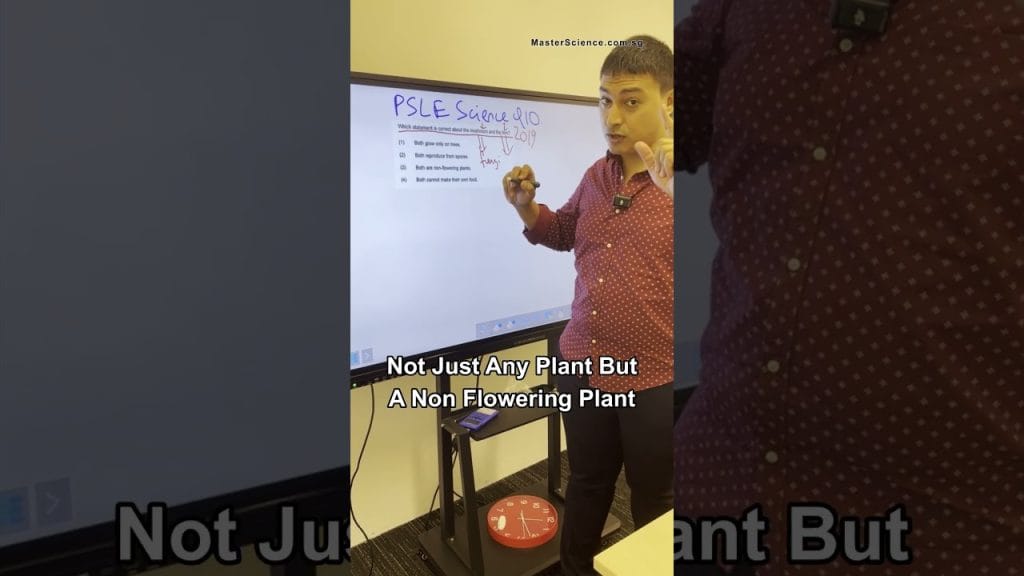
Introduction Many PSLE students lose easy marks in PSLE Science MCQ fungi and ferns questions because they confuse plants with fungi. This Question 10 tests your understanding of how mushrooms and ferns reproduce, not where they grow. Let’s follow the teacher’s exact working shown on the board. The Question Which statement is correct about […]
Experimental Setup & Control Variables – PSLE Science 2023 Booklet A Question 9
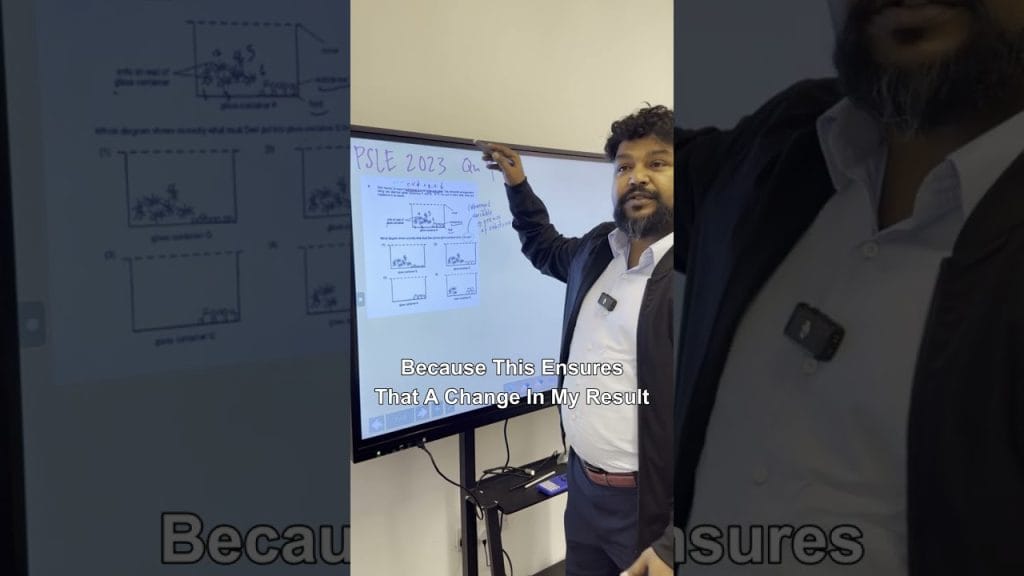
Introduction This PSLE Science question tests students’ understanding of experimental setup, controlled variables, and fair tests. The teacher carefully analyses each diagram to ensure that only one variable changes while all other conditions remain the same. The goal: identify the correct experimental setup that creates a fair comparison. The Question The exam shows four […]
How to Measure the Volume of a Coin Bank (Irregular Container) – PSLE Science
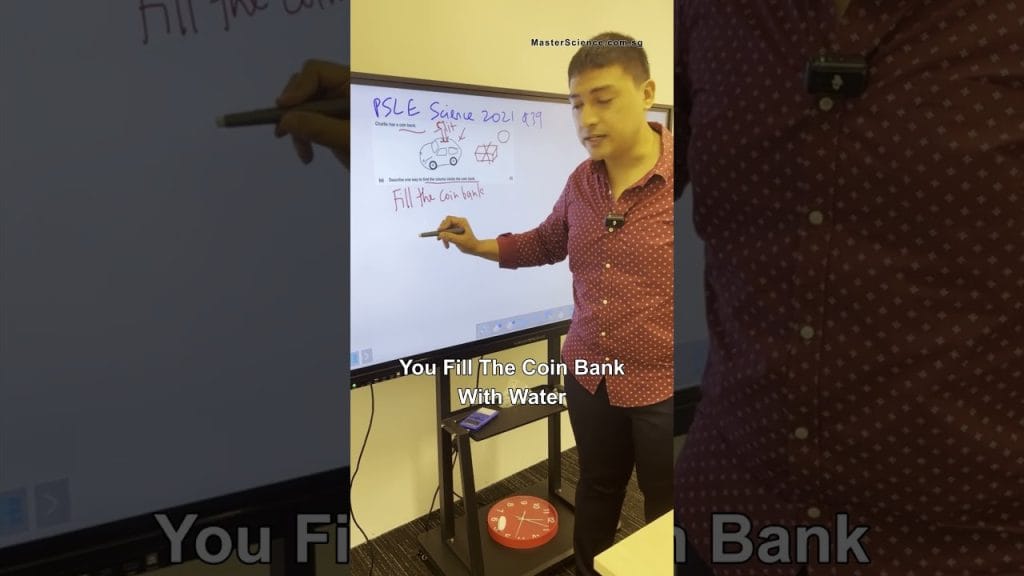
Introduction In PSLE Science, students must know practical ways to measure volume/capacity of irregular containers that don’t have markings. A coin bank is a perfect example. The fastest approach is the fill-and-pour method using a measuring cylinder. This question also checks observation: can you spot the coin slot, which identifies the coin bank? The […]
Gases Found in Air – PSLE Science 2021 Question 3
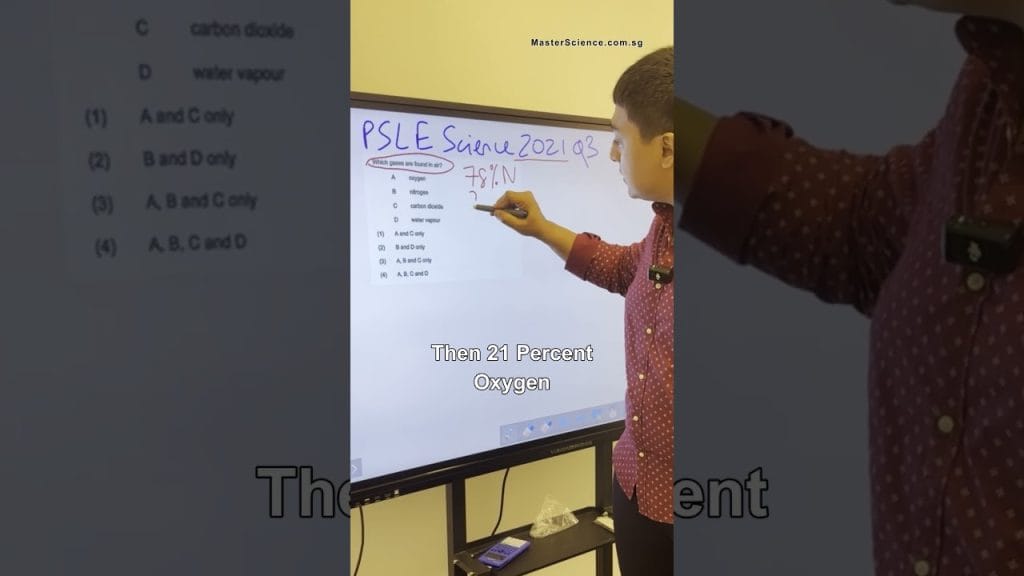
Introduction This PSLE Science question checks student understanding of the composition of air. Many students memorise the wrong percentages or forget that water vapour is also a part of air. The teacher explains the correct components and their approximate proportions. The Question Which gases are found in air? Options included: A: Oxygen B: Nitrogen […]
Energy Conversion When a Ball Falls – PSLE Science 2019 Question 18
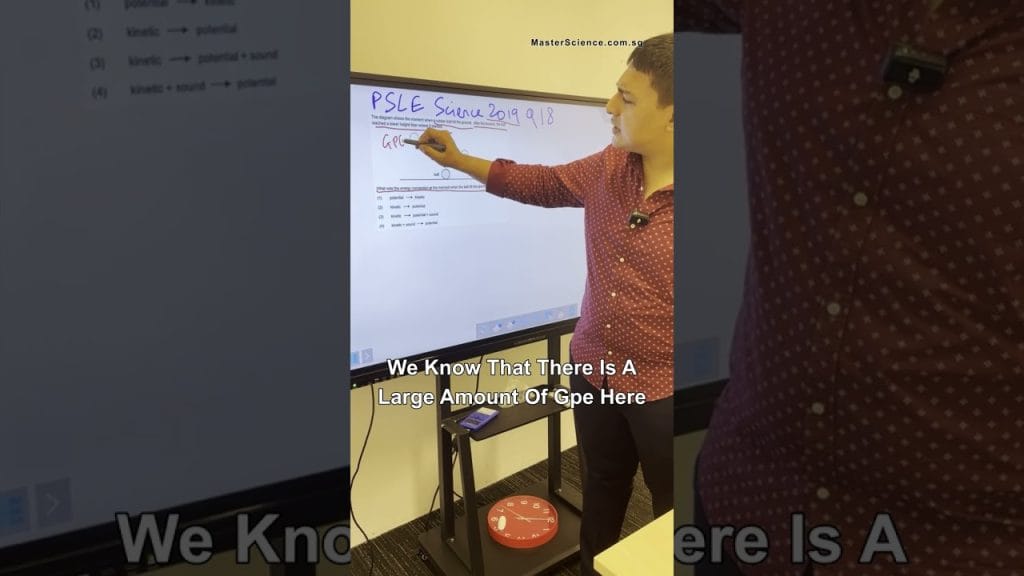
Introduction This PSLE Science question tests your understanding of energy conversion when an object falls from a height. A common mistake is assuming gravitational potential energy changes directly into sound energy before the ball hits the ground — but this is incorrect. The teacher shows the correct reasoning step-by-step. The Question A rubber ball […]
Why Hand Sanitiser Dries Quickly – PSLE Science 2023 Question 35
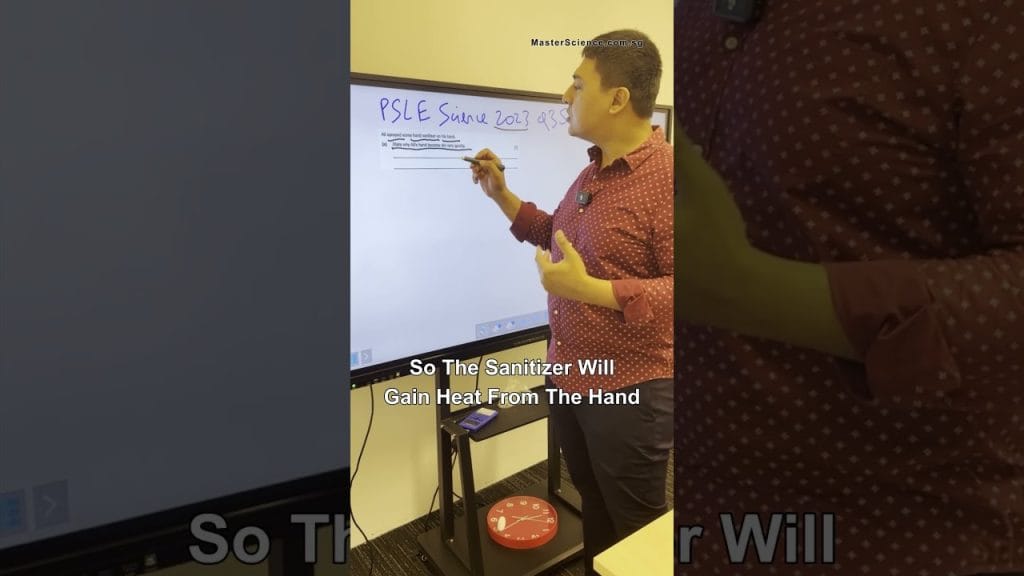
Introduction This PSLE Science question focuses on evaporation, a key concept tested frequently in both Booklet A and Booklet B. Hand sanitiser contains alcohol, which evaporates much faster than water. The teacher explains how heat from the hand speeds up evaporation, causing the hand to dry quickly. The Question Afiq sprayed some hand sanitiser […]
Effects of Deforestation Explained – PSLE Science 2023 Question 1
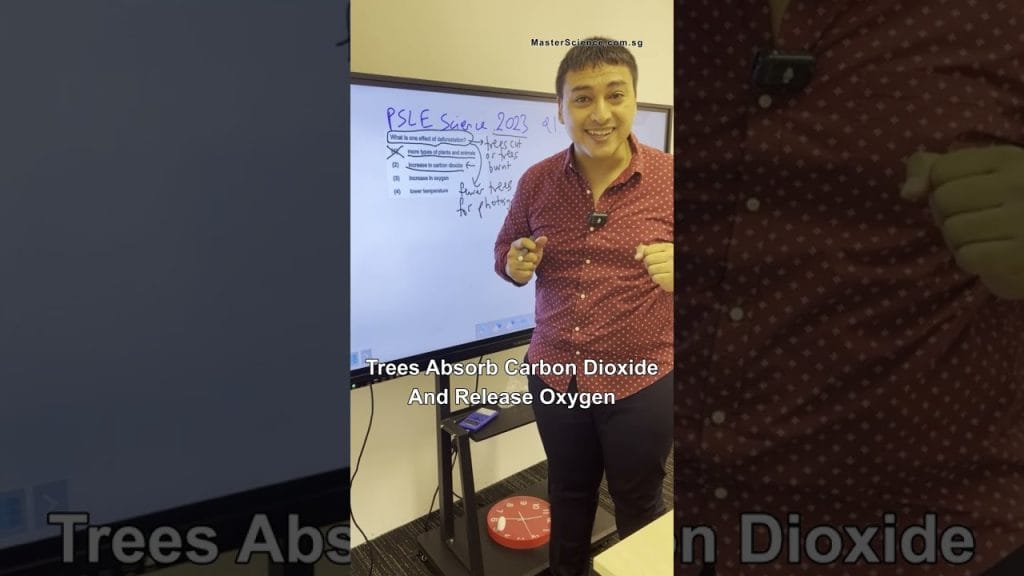
Introduction Deforestation is a common topic in PSLE Science, especially in questions related to photosynthesis, gases in the environment, and human impact on nature. In this question, students are tested on whether they understand what happens when trees are cut down or burnt. The Question What is one effect of deforestation? Options included: More […]
Why Alice’s Spectacles Fog Up – PSLE Science 2019 Question 40
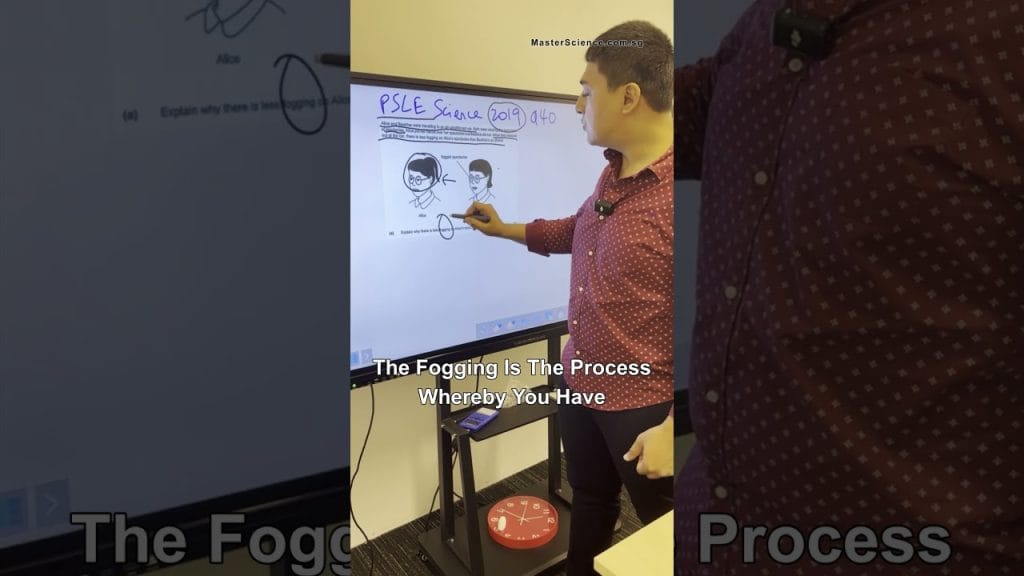
Introduction This question tests the concept of condensation and heat transfer, a common PSLE Science theme where students must explain why water droplets appear on surfaces. The teacher’s explanation highlights how temperature differences cause fogging on spectacles — a real-life application of condensation. The Question Alice and Beatrice were travelling in an air-conditioned car. […]